Guides · Sanford, Florida
Why Sanford Is Where It Is
Sanford exists because one man bought the wrong side of the lake and then got lucky with a cold snap. That is the short version. The longer version starts with a fort, moves through a citrus apocalypse, and ends with a city that still carries its founder’s name like a dare.
The Land Before the Name
Before there was Sanford, there was Fort Mellon. During the Seminole Wars of the 1830s, the U.S. Army built a post on the shore of Lake Monroe. It was a military outpost, not a town. It was a place to hold ground, not to build one.
The settlement that grew around it was called Mellonville. It had the waterfront. It had the boats. It had the early start. For a while, it looked like Mellonville would be the city on the lake.
Then Henry Shelton Sanford showed up.
The Purchase
In 1870, Henry Shelton Sanford bought the land west of Mellonville. He did not buy the existing town. He bought the empty ground next to it, the land that would become his namesake city. Seven years later, in 1877, the city of Sanford was incorporated.
Mellonville did not disappear. It got absorbed. Six years after incorporation, Sanford annexed Mellonville outright. The older settlement became a neighborhood of the newer one. The fort’s legacy stayed in the soil, but the name on the map belonged to the buyer.
That is how Sanford works. It takes what is there and makes it its own.
The Freeze That Changed Everything
For a while, citrus was the game. The sandy soil, the lake effect, the warm winters—it all pointed to oranges. Growers planted. Crops matured. The future looked sweet.
Then came the winter of 1894-95. The freeze hit hard. It did not damage the crop. It destroyed the entire citrus crop. Nothing was left to pick, pack, or ship.
Most growers left. The ones who stayed did something smarter. They turned to vegetables.
It was not a glamorous pivot. It was a survival move. But it worked. By the first decade of the twentieth century, Sanford had become one of the largest vegetable shipping centers in the United States. Not the largest. One of them. That is a different thing, and it matters.
The Celery City
Among all those vegetables, one crop took the crown. Celery. It thrived in the muck and the water. It shipped well. It paid well. It put the city’s name on crates and railcars and menus across the country.
Sanford became the Celery City. Not because of marketing. Because of what grew in the ground after the oranges died.
The name stuck. It is still the city’s nickname. It is a reminder that failure can be redirected, that the land will grow something if you are willing to change what you ask of it.
The Shape of the City Today
Sanford is not a sprawling suburb. It is a compact, walkable town built around a lake and a downtown that still functions as a center. The population sits at 62,292 people. The median age is 36.8 years. That is a youngish, working-age population. Not a retirement colony.
The median household income is $62,877. The median home value is $272,900. The median gross rent is $1,496. Those numbers tell a story: this is a place where buying is within reach for many, where renting is not cheap but not insane, where the economy is stable enough to keep people in place.
The unemployment rate is 4.5 percent. That is low. That is a working town.
Education is a mixed bag. 26.8 percent of residents hold a bachelor’s degree or higher. That is not a college town. It is a practical town, a place where people work with their hands and their heads.
The Housing Reality
There are 26,069 total housing units in Sanford. Of those, 2,047 are vacant. That is a vacancy rate of about 7.8 percent. Not a crisis, but not nothing. It suggests a market with some slack, some room to move.
The seasonal number is the interesting one. Only 269 units are held for seasonal or recreational use. That is barely over one percent of the housing stock. This is not a vacation town. It is not a second-home market. People live here. They live here year-round. The lake is not a resort amenity; it is a working waterfront.
The Historic Districts
Sanford has two historic districts. The first is Historic Georgetown. The second is the Commercial Historic District in downtown.
Georgetown is residential. It is the kind of neighborhood that gets walked, not driven through. The houses are old. The streets are shaded. It is the part of town where the history is lived in, not roped off.
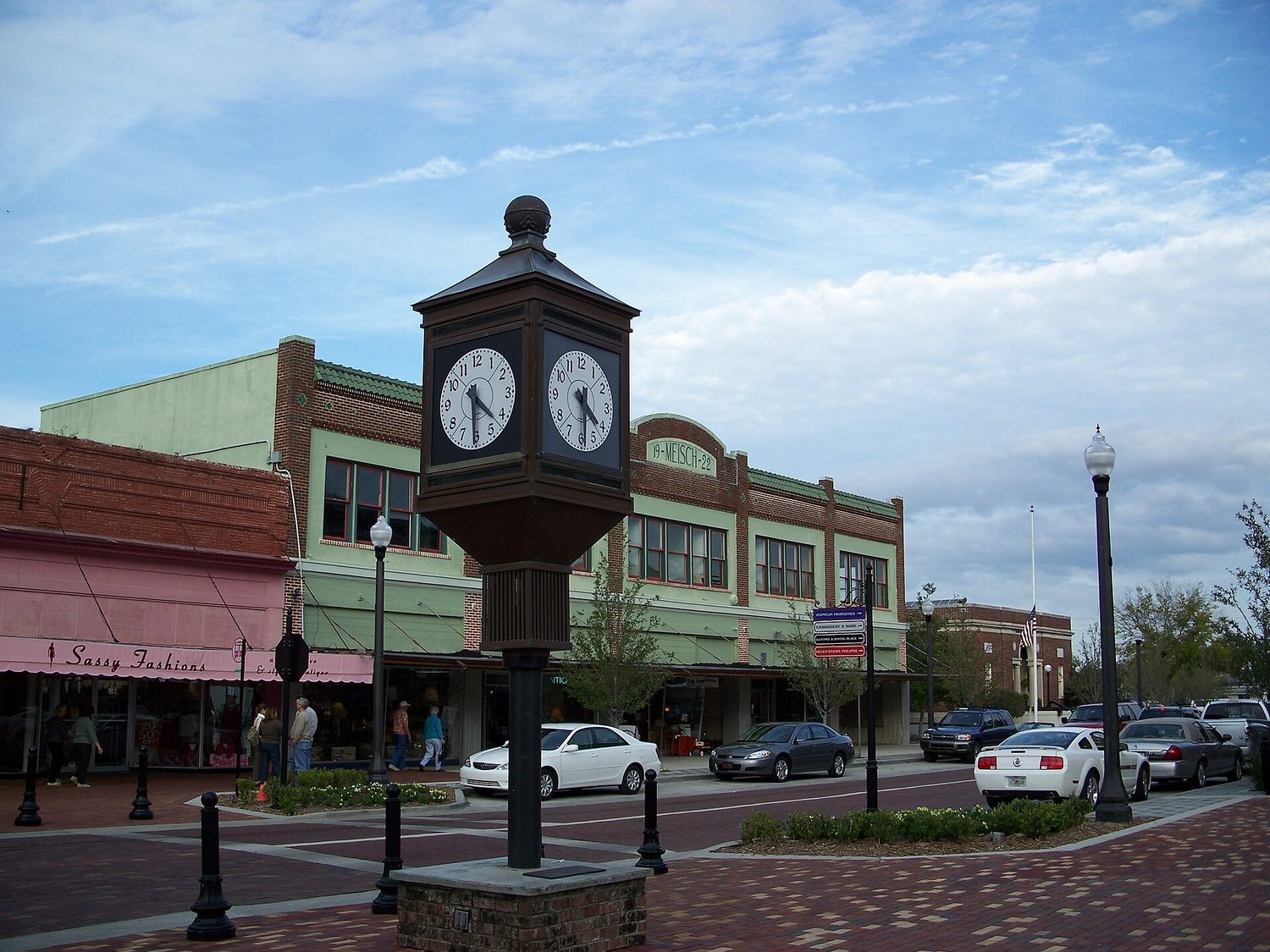
The Commercial Historic District is downtown. This is where the city does its business. It is the bones of the old vegetable shipping economy, repurposed. The buildings are from another era, but they are not empty. They are the frame for a downtown that still works.
The City That Walks
Sanford is the most city-like town in the batch. It has density. It has a downtown that is actually downtown. It has a lake that is part of the street grid, not a barrier to it.
This is a place designed for walking. The historic districts are compact. The downtown is connected to the residential areas. You do not need a car to experience the city. You need legs and an afternoon.
The city carries its founder’s name, but it does not carry his ambitions. Henry Shelton Sanford bought land. The freeze reshaped it. The growers who stayed rebuilt it. The city that exists today is not the one he planned. It is the one that grew back.
That is why Sanford is where it is. Not because of a fort, though the fort started it. Not because of citrus, though citrus built it. Not because of celery, though celery named it.
Sanford is where it is because one man bought land, a freeze wiped out the first economy, and the people who stayed refused to leave. They grew something else. They built something new. They kept the name of the man who started it, and they made it their own.
That is the whole story. The rest is just walking the streets.
Every business named above is one we hold a listing for, and every date traces to a source on our sources page. We do not describe menus, interiors or service we have not verified. Details change — confirm before you travel.