Guides · Sanford, Florida
The History of Sanford in 7 Landmarks
Sanford is not a beach town pretending to be a city, nor a bedroom community with a nostalgic Main Street. It is a working river town with a grid, a railroad, and a history of betting on the wrong crop—then doubling down on the right one.
The Land Before the Name
Before Henry Shelton Sanford bought the land west of Mellonville in 1870, the ground had already been fought over. During the Seminole Wars of the 1830s, the area was the site of a US Army post named Fort Mellon. That fort is the first landmark, though little of it remains above ground. It matters because it explains the layout: the military chose the high ground near the river, and the town grew from that defensive footprint. Fort Mellon is why Sanford’s downtown sits where it does, and why the streets feel older and more deliberate than the sprawl to the south.
The Founder’s Gamble
Henry Shelton Sanford bought the land, but he did not build a village. He built a proposition. The city of Sanford was incorporated in 1877, and six years later it annexed Mellonville. That annexation is the second landmark—not a building, but a boundary. It folded the older, rougher river settlement into the new, ambitious one. The result was a single municipality with two histories: one military, one mercantile. You can still feel the seam when you cross from the historic downtown into the older riverfront blocks.
The Freeze That Changed Everything
The winter of 1894-95 destroyed an entire citrus crop. That freeze is the third landmark, and it is the most important one because it is invisible. The orange groves that funded the town’s early growth were gone in a season. Growers who stayed did not replant oranges. They turned to vegetables. By the first decade of the twentieth century, Sanford was one of the largest vegetable shipping centres in the United States. That is not a nostalgic claim; it is a logistical fact. The railroad and the river made it possible, and the freeze made it necessary.
The Celery City
The fourth landmark is a nickname. Sanford has been known as the Celery City after the crop that succeeded where citrus had failed. Celery is not romantic. It is wet, heavy, and perishable. It required muck farms, irrigation, and a cold chain that did not exist until the railroads built it. That infrastructure is the real landmark: the packing houses, the ice plants, the freight sidings. They are mostly gone now, but the name stuck. When you hear “Celery City,” you are hearing about a town that adapted to disaster with a commodity crop. That is the whole story in two words.
Historic Georgetown
The fifth landmark is Historic Georgetown, one of the city’s two historic districts. It is the residential side of the story. This is where the workers and the small merchants lived, in houses that predate the automobile era. The streets are narrow, the lots are deep, and the architecture is modest. It matters because it is not a plantation or a mansion row. Georgetown is a working neighborhood that survived because the town did not tear it down. It gives Sanford something most Florida towns lack: a walkable, human-scaled residential core that is not a gated community.
The Commercial Historic District
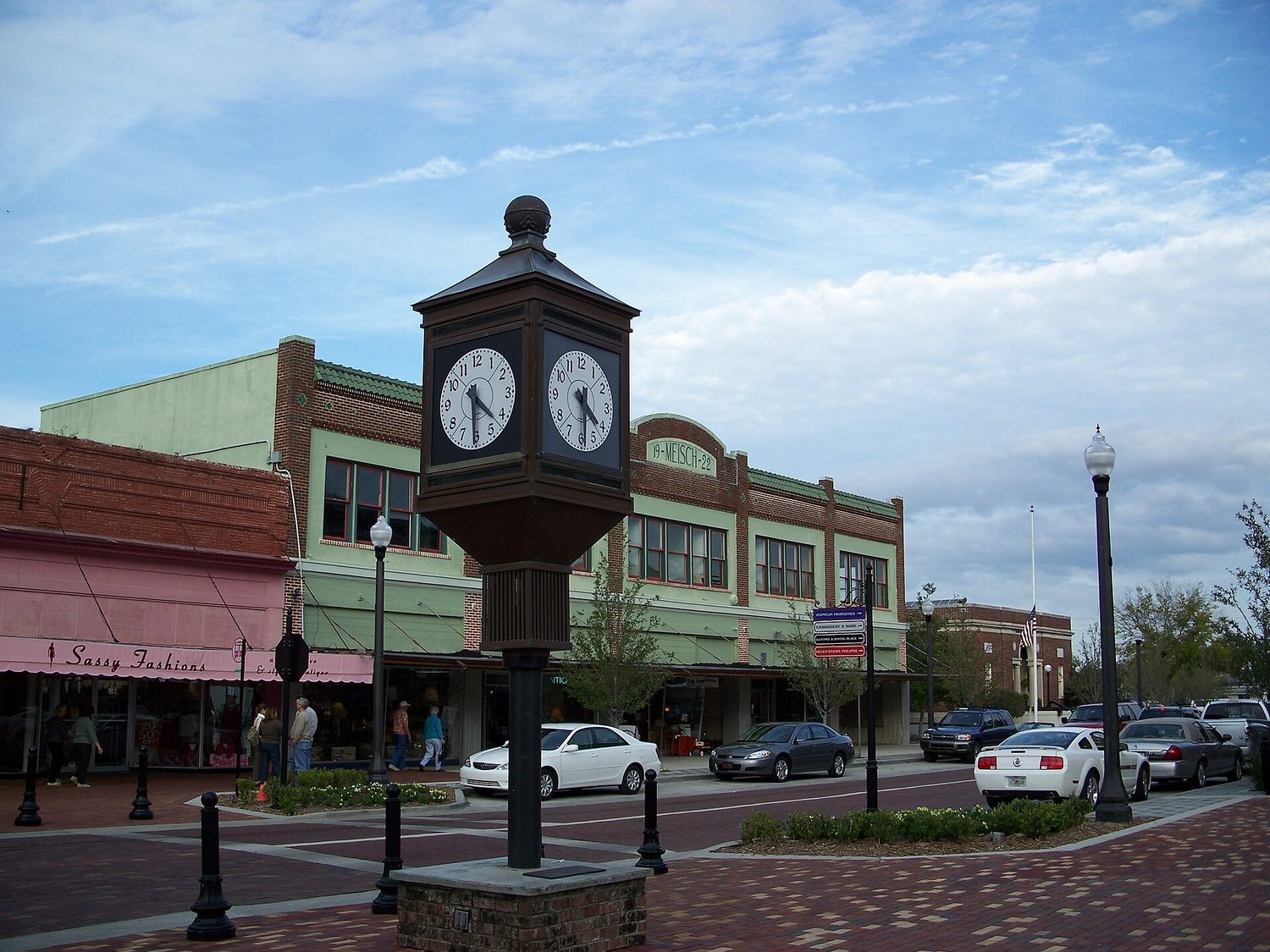
The sixth landmark is the Commercial Historic District in downtown Sanford. This is the business spine. It runs along the main commercial streets, where the brick storefronts were built to serve the vegetable trade and the passenger rail. The district is the reason Sanford feels like a city rather than a strip mall. The buildings are two and three stories, with awnings and display windows, built for pedestrians, not cars. It is the kind of downtown that other Florida towns try to fake with stucco and fake balconies. Here, it is original.
The Census as Landmark
The seventh landmark is not a structure. It is the current population. Sanford has 62,292 people, a median age of 36.8, and a median household income of 62,877 dollars. The median home value is 272,900 dollars. The median gross rent is 1,496 dollars. There are 26,069 housing units, of which only 269 are held for seasonal or recreational use. That last number is the telling one. In a state full of snowbird towns, Sanford is not one of them. The vacancy rate is low, the rent is not cheap, and the people who live here mostly live here year-round.
The education numbers back that up. 26.8 percent of residents hold a bachelor’s degree or higher. The unemployment rate is 4.5 percent. This is not a retirement colony or a tourist stop. It is a place with a working economy, a permanent population, and a housing stock that is actually occupied. The 2,047 vacant units are a rounding error in a state where seasonal emptiness is the norm.
What the Landmarks Add Up To
The history of Sanford is not a timeline of preserved buildings. It is a sequence of bets: a fort, a founder, a freeze, a crop, a neighborhood, a commercial district, and a census. Each one replaced the last. The fort became a town. The citrus became celery. The celery became a shipping hub. The shipping hub became a downtown. And the downtown became a place where 62,000 people actually live, not just visit.
The city carries the name of its founder, Henry Shelton Sanford, but it does not carry his industry. What survived is the grid, the river, the railroad, and the habit of reinvention. That is why Sanford feels different. It is not preserved in amber. It is a city that has already failed once, spectacularly, and chose to grow something else. The landmarks are just the evidence.
Every business named above is one we hold a listing for, and every date traces to a source on our sources page. We do not describe menus, interiors or service we have not verified. Details change — confirm before you travel.