Guides · Sanford, Florida
How Sanford Got Its Name
Henry Shelton Sanford bought the land west of Mellonville in 1870, and the city that grew there has carried his name ever since—but the name almost wasn’t the story.
The Founder’s Gamble
Sanford was a diplomat, a lawyer, and a land speculator with a vision for a city on Lake Monroe. He purchased the property in 1870, and the town was formally incorporated in 1877. Six years later, Sanford absorbed its older neighbor, Mellonville, a settlement that traced its roots to the Seminole Wars of the 1830s, when the area hosted a US Army post named Fort Mellon.
That annexation matters. It folded the frontier past into the commercial future. Sanford didn’t erase Mellonville; it swallowed it.
What the Freeze Did
For a moment, citrus was everything. Then the winter of 1894-95 destroyed an entire crop. Not a bad season—an obliteration. Growers who stayed had to pivot or leave.
They pivoted to vegetables. By the first decade of the twentieth century, Sanford was one of the largest vegetable shipping centres in the United States. That is not a modest claim. It is a fact that reshaped the town’s identity.
The Celery City
The crop that succeeded where citrus failed had a name: celery. It stuck so hard that Sanford still goes by the Celery City. It is not a nostalgic nickname. It is a reference to the exact moment the town refused to die.
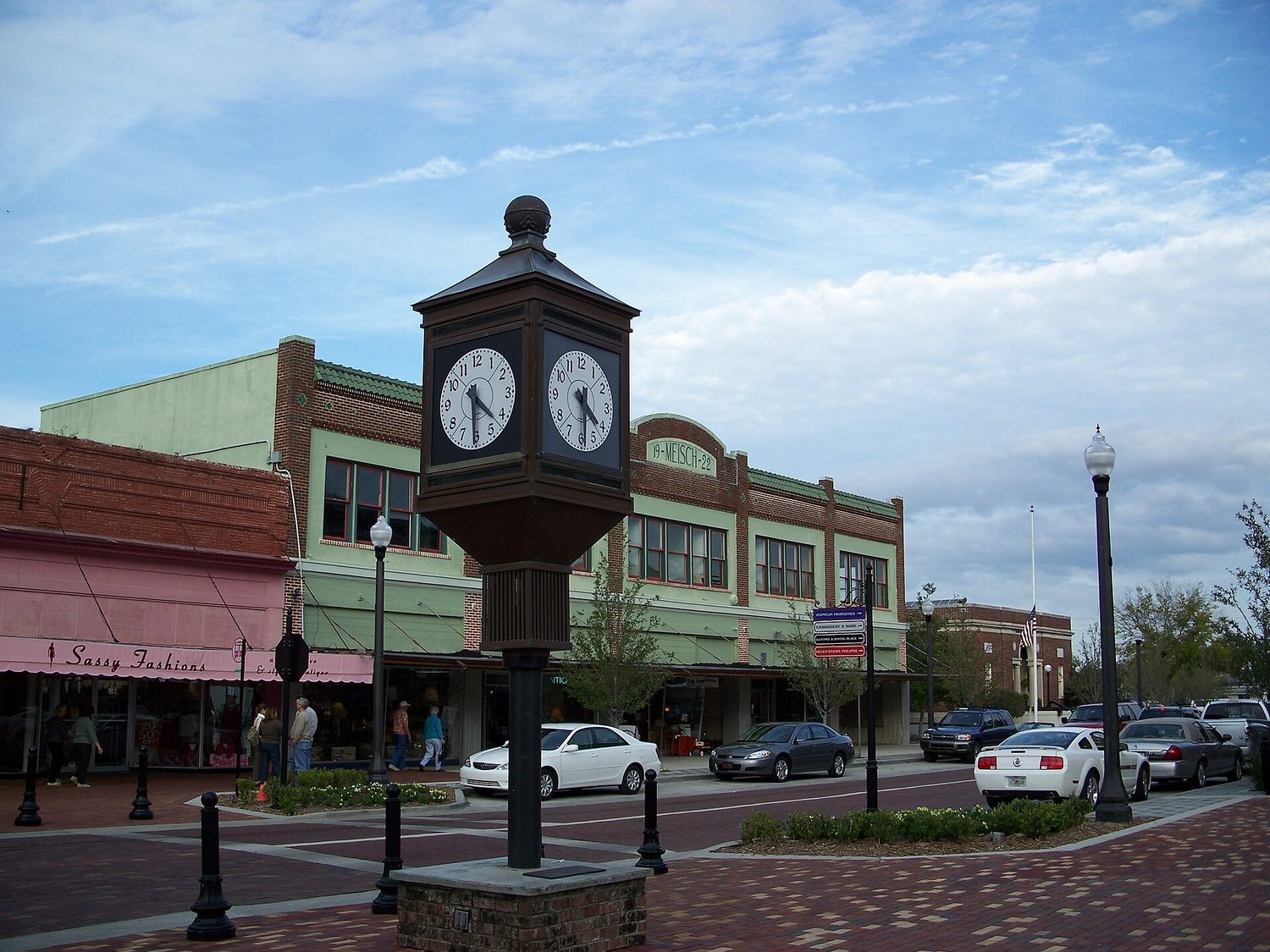
That history shows up in the built environment. The Commercial Historic District anchors downtown, a dense grid of early twentieth-century buildings that still function as the city’s core. Historic Georgetown, the other designated district, holds the residential side of the story—the houses and porches that give Sanford its particular texture.
The City Today
The data says Sanford is not a sleepy outpost. Population sits at 62,292, with a median age of 36.8. That is a young, working population. The median household income is $62,877, and the median home value is $272,900. Rents run a median of $1,496. Unemployment is 4.5 percent. About 26.8 percent of residents hold a bachelor’s degree or higher.
The housing stock tells a useful story. There are 26,069 total units. Only 269 are held for seasonal or recreational use—just over one percent. This is not a vacation town. It is a place where people live. Vacant units number 2,047, which is tight but not distressed.
Walkable, Not Whimsical
Sanford is the most city-like town in this part of Florida. It has a real downtown, not a strip. It has districts with legal boundaries and historical weight. It has a grid that rewards walking.
That is why the signature event works. Sanford Porchfest, held on the fourth Saturday of February, is a free grassroots music festival where bands play simultaneously from porches across the historic residential downtown. It is run by a 501(c)(3) that funds youth performing-arts programming and fine-art scholarships. No stages, no barriers, no ticket. Just houses, music, and people moving between them.
That event could not happen in a suburban sprawl. It requires density, front porches, and a neighborhood with enough character to hold an audience. Sanford has that because Sanford was built as a city, not as a collection of cul-de-sacs.
The Name Is the Point
The city is named for Henry Shelton Sanford, the man who bought the land. But the name endures because of what happened after the purchase—the incorporation, the annexation, the freeze, the pivot, the celery. A founder’s name can be a monument or a footnote. Here, it is a title earned by staying through the hard years.
Mellonville gave Sanford its military origin. The freeze gave it its resilience. Celery gave it its nickname. And Henry Shelton Sanford gave it his name.
That is how Sanford got its name. The rest is just what the city did with it.
Every business named above is one we hold a listing for, and every date traces to a source on our sources page. We do not describe menus, interiors or service we have not verified. Details change — confirm before you travel.