Guides · Sanford, Florida
What Has Changed in Sanford, Florida: A City Reinvented
Sanford doesn't do quaint. It does pivot. The city that lost its citrus to a hard freeze and rebuilt itself on celery is still doing what it does best: changing the crop, keeping the grid, and letting the streets do the talking.
The Freeze That Rewrote the Map
Henry Shelton Sanford bought the land west of Mellonville in 1870, and the city of Sanford was incorporated in 1877. Six years later, it annexed Mellonville outright. That annexation was the first sign of the city's habit: absorb what works, drop what doesn't.
The winter of 1894-95 destroyed an entire citrus crop. Not damaged it. Destroyed it. Growers who stayed didn't replant oranges. They turned to vegetables. By the first decade of the twentieth century, Sanford was one of the largest vegetable shipping centres in the United States. The crop that stuck was celery, and the city has carried the name Celery City ever since.
That's the origin story. The more useful part is what it tells you about the place: Sanford doesn't mourn a lost harvest. It grows something else and ships it faster.
The Numbers Right Now
The census data draws a clear picture of a working, walkable town, not a resort.
| Metric | Figure |
|---|---|
| Population | 62,292 |
| Median age | 36.8 years |
| Median household income | $62,877 |
| Median home value | $272,900 |
| Median gross rent | $1,496 |
| Bachelor's degree or higher | 26.8% |
| Unemployment rate | 4.5% |
| Total housing units | 26,069 |
| Vacant housing units | 2,047 |
| Seasonal or recreational units | 269 |
The seasonal count is tiny. The vacancy rate is under eight percent. This is a city where people live year-round, not a place that empties out when the weather turns. The median age sits just under 37, which means a solid mix of long-term residents and newer arrivals who came for the bones of the downtown and stayed for the commute to Orlando.
Two Historic Districts, One Urban Feel
Sanford has two historic districts, and they do different jobs.
Historic Georgetown sits as one of the city's two historic districts. It's residential, tree-lined, and it's where the porch culture lives. That porch culture has a practical outlet: Sanford Porchfest, a free grassroots music festival held on the fourth Saturday of February. Bands play simultaneously from porches across the historic residential downtown. It's run by a 501(c)(3) that funds youth performing-arts programming and fine-art scholarships. No stage, no ticket, no fence. You walk the blocks and catch whatever's playing from the sidewalk.
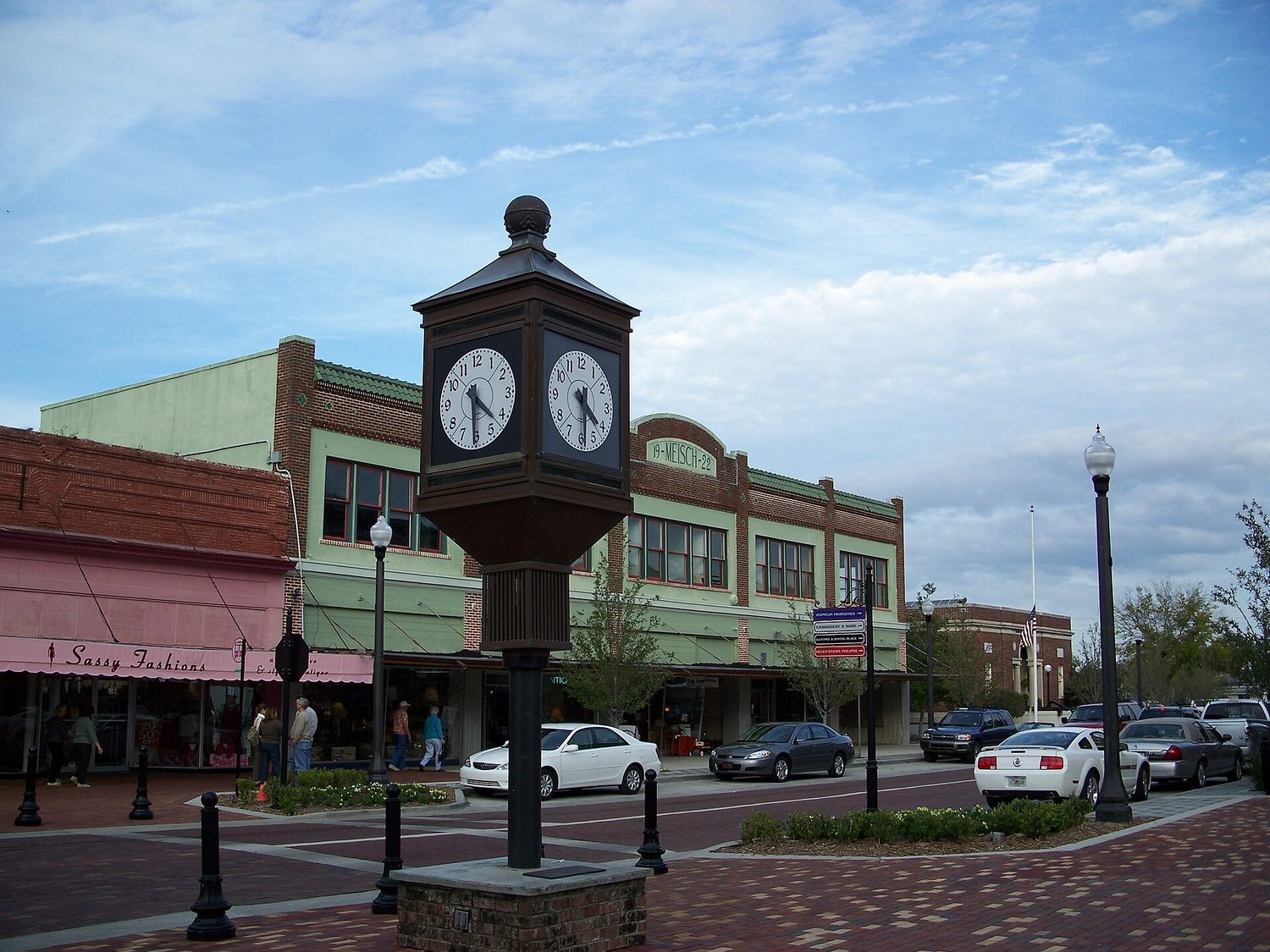
The Commercial Historic District in downtown Sanford is the other half. This is the urban core, the part that feels like a city rather than a suburb. The streets are laid out for walking, the storefronts are active, and the railroad tracks that once shipped celery now frame a downtown that has kept its scale. You don't need a car to experience it. You need comfortable shoes.
What Has Actually Changed
The citrus is gone. The celery boom is long over. What remains is the pattern: a city that adapts its economy without abandoning its address.
The freeze of 1894-95 forced the shift to vegetables. The collapse of the celery market decades later forced another shift, this time toward commuter city and cultural anchor. The historic districts are not preserved as museum pieces; they're the active frame for Porchfest, for the downtown storefronts, and for the residential blocks that keep the vacancy rate low.
The military history runs deeper than the citrus. During the Seminole Wars of the 1830s, the area was the site of a US Army post named Fort Mellon. That fort predates the city, the celery, and the railroad. Sanford has been a strategic point on a map for nearly two centuries. It just keeps changing what it's strategic for.
The Day-Trip Math
Sanford sits in a useful spot for people who want a city base and a regional reach. The nearby towns we cover are all within a reasonable drive, and each one has its own annual hook:
| Town | Distance | Event |
|---|---|---|
| Oviedo | 11 miles | Great Day in the Country |
| Altamonte Springs | 12 miles | Red Hot & Boom |
| Mount Dora | 25 miles | Mount Dora Arts Festival |
| Mount Dora | 25 miles | Mount Dora Craft Fair |
| Clermont | 36 miles | Pig on the Pond |
| Flagler Beach | 48 miles | First Friday |
None of those are Sanford. That's the point. You live in the city, and you drive out for the festivals. Or you stay home and walk to Porchfest. Either way, you're not stuck.
The takeaway is simple: Sanford's history is a series of hard resets. Citrus died, celery rose. Celery faded, the city reoriented. The streets, the districts, and the railroad stayed. The crop changed, but the city didn't shrink. It just planted something else.
Common questions
- Why is Sanford called the Celery City?
- The 1894-95 freeze killed the citrus crop. Growers who stayed switched to vegetables, and by the early 1900s Sanford became a top US vegetable shipping hub. Celery took off, giving the city its nickname.
- What are the historic districts in Sanford?
- Sanford has two: Historic Georgetown and the Commercial Historic District downtown. Both are walkable areas with old architecture and local character, reflecting the city's urban, built-up feel.
- Is Sanford a good place to live for young professionals?
- Median age is 36.8, with 26.8% holding a bachelor's degree or higher. Unemployment is 4.5%, and median household income is $62,877. It's a city-like vibe, not a sleepy town.
- What's the housing market like in Sanford?
- Median home value is $272,900; median gross rent is $1,496. Of 26,069 units, only 269 are seasonal, so it's mostly year-round residents. Vacancy is 2,047 units, giving some options.
- What fun events happen in Sanford?
- Sanford Porchfest is a free grassroots music festival on the fourth Saturday of February. Bands play from porches across historic downtown, and it funds youth arts programs and scholarships.
- How did Sanford get its name?
- Henry Shelton Sanford bought the land west of Mellonville in 1870. The city incorporated in 1877 and annexed Mellonville six years later. It's named after him, plain and simple.
Every business named above is one we hold a listing for, and every date traces to a source on our sources page. We do not describe menus, interiors or service we have not verified. Details change — confirm before you travel.