Guides · Sanford, Florida
Sanford FL Waterfront History, Celery City & Porchfest
Sanford sits on the southwest shore of Lake Monroe, where the St. Johns River widens into a navigable lake. That water is the reason the city exists. It still dictates how the town works.
How Lake Monroe and the St. Johns River Made Sanford a City
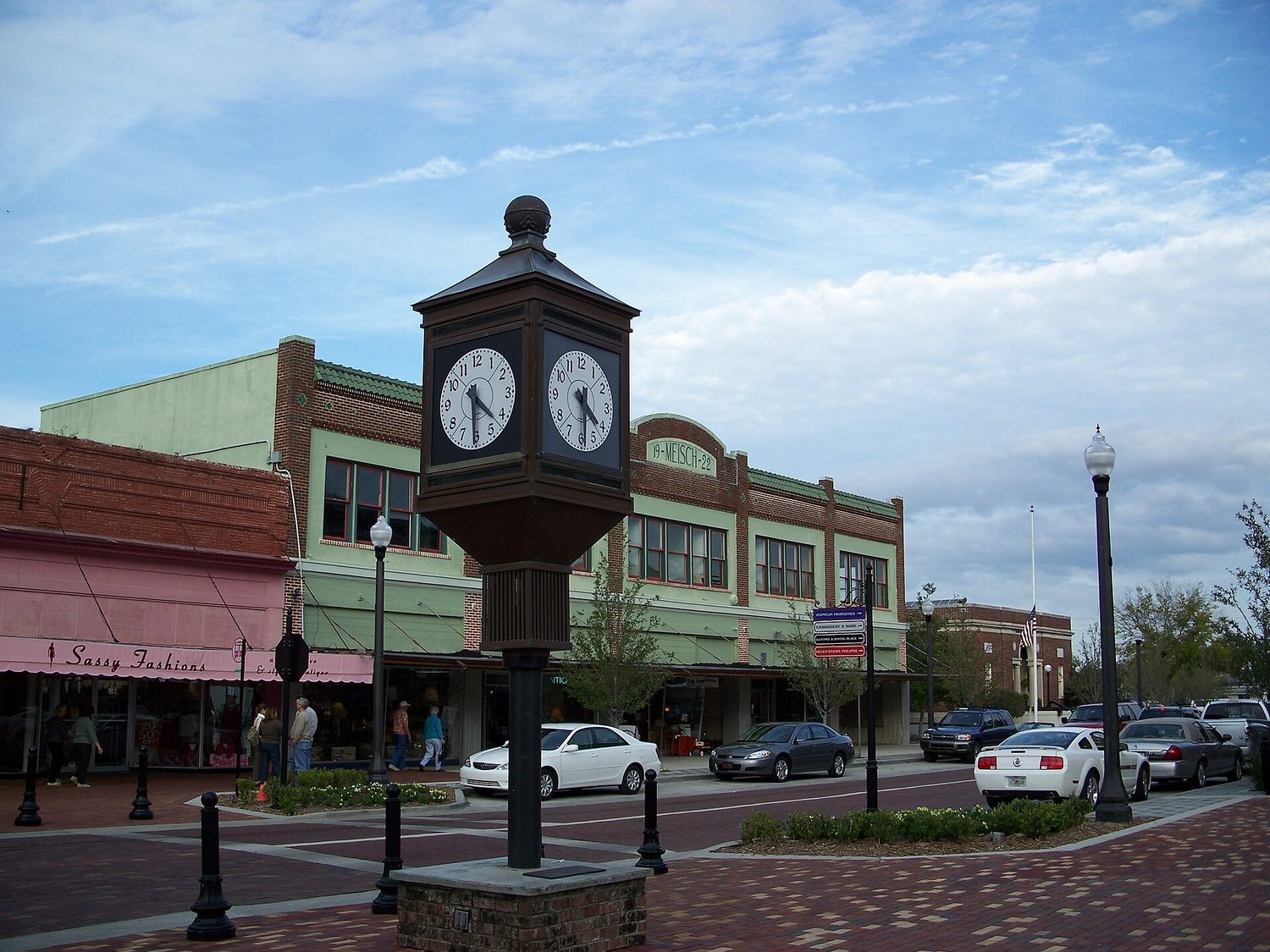
Henry Shelton Sanford bought the land west of Mellonville in 1870, and the city incorporated in 1877, annexing Mellonville six years later. But the water did the real work. Lake Monroe and the St. Johns River connected Sanford to the Atlantic via the river's run to Jacksonville, and the railroad met the steamboats here. That made the waterfront a transfer point for people and freight, not a postcard backdrop. The riverfront remains the city's working spine—boats, docks, and the grid of streets that climb away from the water. Sanford is the most city-like town in this part of Florida, and it got that way because it was built as a logistics hub, not a resort.
The 1894 Freeze: How Sanford Became the Celery City
The winter of 1894-95 killed the citrus crop outright—a hard freeze that ended Sanford's orange era. Growers who stayed didn't replant citrus; they pivoted to vegetables. By the first decade of the twentieth century, Sanford was one of the largest vegetable shipping centers in the United States. The crop that carried the city was celery, and the name stuck: Sanford has been known as the Celery City ever since. That freeze didn't just change what grew in the fields—it changed the city's identity and its economy, turning a failed citrus town into a produce powerhouse.
Sanford's Historic Districts: A Grid Built for Commerce
Sanford has two historic districts, and both are part of a layout that reads more like a city plan than a lakeside village. Historic Georgetown, one of the city's two historic districts, holds some of the oldest residential stock. The Commercial Historic District in downtown Sanford is the business core, with buildings that line up along the streets rather than facing the water. You can see the bones of a real downtown—blocks, corners, storefronts—not a scattering of cottages around a lake. What you see in both districts is density and connection, the physical evidence of a town that was built for commerce.
Sanford Porchfest: Music on Porches in a Walkable Downtown
On the fourth Saturday of February, Sanford Porchfest turns the historic residential downtown into a stage. Bands play simultaneously from porches across the neighborhood, and the audience walks or bikes between them. It's a free, grassroots festival run by a 501(c)(3) that funds youth performing-arts programs and fine-art scholarships. Porchfest only works because the housing stock is dense and the streets are pedestrian-scaled—you can move from porch to porch on foot without needing a car. That's the whole point: the city's historic layout becomes the venue.
Sanford Demographics: A Younger, Educated, Working City
The census data shows a population that's younger and more educated than the typical Florida lake town. The median age is 36.8 years, and 26.8 percent of residents hold a bachelor's degree or higher. The median household income is $62,877, with a 4.5 percent unemployment rate. Housing is still within reach: the median home value is $272,900, and the median gross rent is $1,496. There are 26,069 total housing units, with 2,047 vacant and only 269 held for seasonal or recreational use. That last number matters—Sanford's housing stock is mostly full-time residents, not vacation homes. It's a stable, working city.
Day Trips from Sanford: Water Towns to Explore Nearby
Sanford's position on the water and its road and rail connections make it a practical base for exploring the region. You can head south to Oviedo, west to Mount Dora, or east to Flagler Beach, and each one has its own relationship with water.
| Town | Water Feature | Signature Event |
|---|---|---|
| Sanford | Lake Monroe / St. Johns River | Sanford Porchfest |
| Oviedo | Lake Jesup | Great Day in the Country |
| Altamonte Springs | Lake Orienta / Little Wekiva River | Red Hot & Boom |
| Mount Dora | Lake Dora | Mount Dora Arts Festival / Craft Fair |
| Clermont | Lake Minneola | Pig on the Pond |
| Flagler Beach | Atlantic Ocean | First Friday |
Sanford isn't the quaintest stop on that list, and it doesn't try to be. It's the one with a working waterfront, a historic grid, and the kind of density that lets a music festival happen on front porches. The celery is long gone, but the city it built is still here.
Population: 62,292. Median age: 36.8. Unemployment: 4.5 percent.
Common questions
- Why is Sanford called the Celery City?
- After the freeze of 1894-95 killed the citrus crop, growers switched to vegetables. By the early 1900s, Sanford was a top U.S. vegetable shipping hub, and celery became its signature crop. That's how the Celery City nickname stuck.
- What's the deal with Sanford's historic districts?
- Sanford has two historic districts: Historic Georgetown and the Commercial Historic District downtown. Georgetown is residential with old homes, while downtown's Commercial District has the city's historic commercial buildings. Both are walkable and worth exploring.
- Is Sanford a good place to live?
- Sanford has a median household income of $62,877 and a low 4.5% unemployment rate. Median home value is $272,900, and median rent is $1,496. About 26.8% of residents have a bachelor's degree or higher. It's a solid, mid-sized city.
- What is Sanford Porchfest?
- It's a free grassroots music festival on the fourth Saturday of February. Bands play simultaneously from porches across the historic residential downtown. It's run by a nonprofit that funds youth performing-arts programs and fine-art scholarships.
- How big is Sanford's population?
- Sanford has 62,292 people with a median age of 36.8. There are 26,069 housing units, of which 2,047 are vacant. Only 269 homes are for seasonal or recreational use, so it's mostly year-round residents.
- What's the history of Sanford?
- Henry Shelton Sanford bought the land in 1870, and the city incorporated in 1877, later annexing Mellonville. During the Seminole Wars, Fort Mellon stood here. The citrus freeze of 1894-95 led to celery farming, making Sanford famous.
Every business named above is one we hold a listing for, and every date traces to a source on our sources page. We do not describe menus, interiors or service we have not verified. Details change — confirm before you travel.