Guides · Sanford, Florida
The Best Time of Year to Visit Sanford
The crowds come in fall, but the city is at its best in the winter, when the streets empty and the history is sharp in the air.
The Season That Made the City
You cannot understand Sanford’s calendar without understanding its trauma. In the winter of 1894-95, a freeze killed the citrus crop outright. Not damaged it—destroyed it. The growers who stayed did not replant oranges. They turned to vegetables, and by the first decade of the twentieth century, this town was one of the largest vegetable shipping centres in the United States. The celery that grew where citrus failed gave the city its nickname. The Celery City is not a cute moniker. It is a monument to adaptation.
So the coldest months here are not a dead season. They are the origin story.
February Is the Real Opening Act
The fourth Saturday of February, Sanford Porchfest takes over the historic residential downtown. Bands play simultaneously from porches across the neighborhood. It is free, grassroots, and run by a 501(c)(3) that funds youth performing-arts programming and fine-art scholarships. You wander from house to house, street to street, catching ten minutes of one set, then drifting to the next.
This is the city at its most walkable. The event forces you to move through the historic districts on foot. It is not a festival in a field. It is a festival in the actual architecture of the town.
Porchfest is the best single day of the year. But the entire stretch from January through March is the smart play.
Why Winter Works Here
The crowds are gone. The heat is not. January and February in Sanford sit in the mild range—not cold, not humid, just clear. The historic districts—Historic Georgetown and the Commercial Historic District downtown—are best experienced without sweat on your neck or a festival crowd at your back.
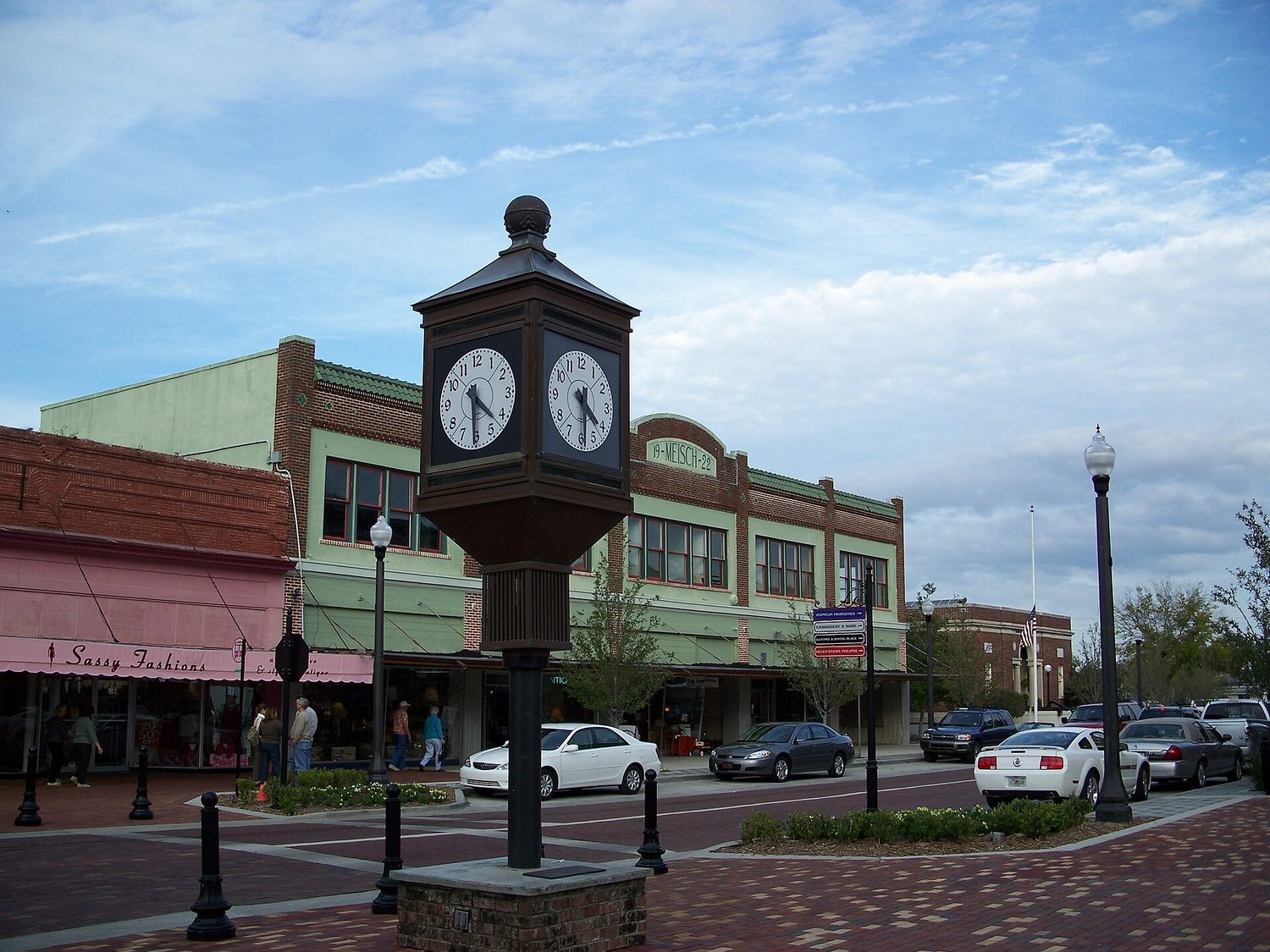
Georgetown is one of the city's two historic districts, a residential pocket that predates the celery boom. The Commercial Historic District is the downtown core, where the brick and the storefronts hold the line of the late nineteenth century. In winter, you can actually see them. No canopy of summer foliage, no haze of August humidity. Just the lines of the buildings and the shadows.
The data backs this up. This is not a seasonal town that empties out. Of the 26,069 housing units in Sanford, only 269 are held for seasonal or recreational use. That is barely one percent. The other 99 percent are people living here, year-round. This is a working city, not a snowbird perch. The winter quiet you get is not abandonment—it is the absence of tourists. Locals stay.
The Demographic Reality
Sanford is younger than the typical Florida retirement town. The median age is 36.8 years. The population is 62,292. It has a 26.8 percent rate of bachelor's degrees or higher—not elite, but credible. The median household income is $62,877, and the median home value is $272,900. People here are not rich. They are stable.
The unemployment rate is 4.5 percent, which is respectable. There are 2,047 vacant housing units, which is a number that suggests room to grow, not decay. The median gross rent is $1,496—low enough that a service worker can live here, high enough that the landlords are not desperate.
This is the profile of a city that functions. It does not need tourists to survive. It needs them to enjoy it.
Skip the Peak
The obvious time to visit any Florida city is high season—November through April. In Sanford, that instinct is half right. November and December are fine, but the holidays bring the crowds that clog the downtown. By late January, the seasonal traffic has thinned.
The sweet spot is mid-February through mid-March. Porchfest anchors the window. The weather is still cool enough to walk for hours. The celery history is tangible, because the fields that made the city are visible in the surrounding farmland. And the crowds are gone.
The Practical Argument
The winter months are the only time of year when you can fully experience the city's layout. Sanford was not built for cars. It was built for streetcars and foot traffic. The Commercial Historic District is compact. The residential streets of Georgetown are narrow. In summer, you rush between air-conditioned bars. In winter, you linger.
The freeze of 1894-95 did not kill Sanford. It redirected it. The city became a vegetable hub, then a river port, then a downtown that survived the suburban exodus. That resilience is visible in winter, when the light is low and the streets are quiet.
Come for Porchfest. Stay for the month after. Skip the summer entirely.
The Verdict
The best time to visit Sanford is the last week of February.
You get the festival, the mild weather, and the post-holiday calm. You get the city's origin story in the air—the winter that destroyed the citrus and built the celery. You get the historic districts without the heatstroke. You get a town that is neither empty nor overrun.
One winter killed the citrus. What grew back named the city. The best time to see that is the season that made it.
Every business named above is one we hold a listing for, and every date traces to a source on our sources page. We do not describe menus, interiors or service we have not verified. Details change — confirm before you travel.